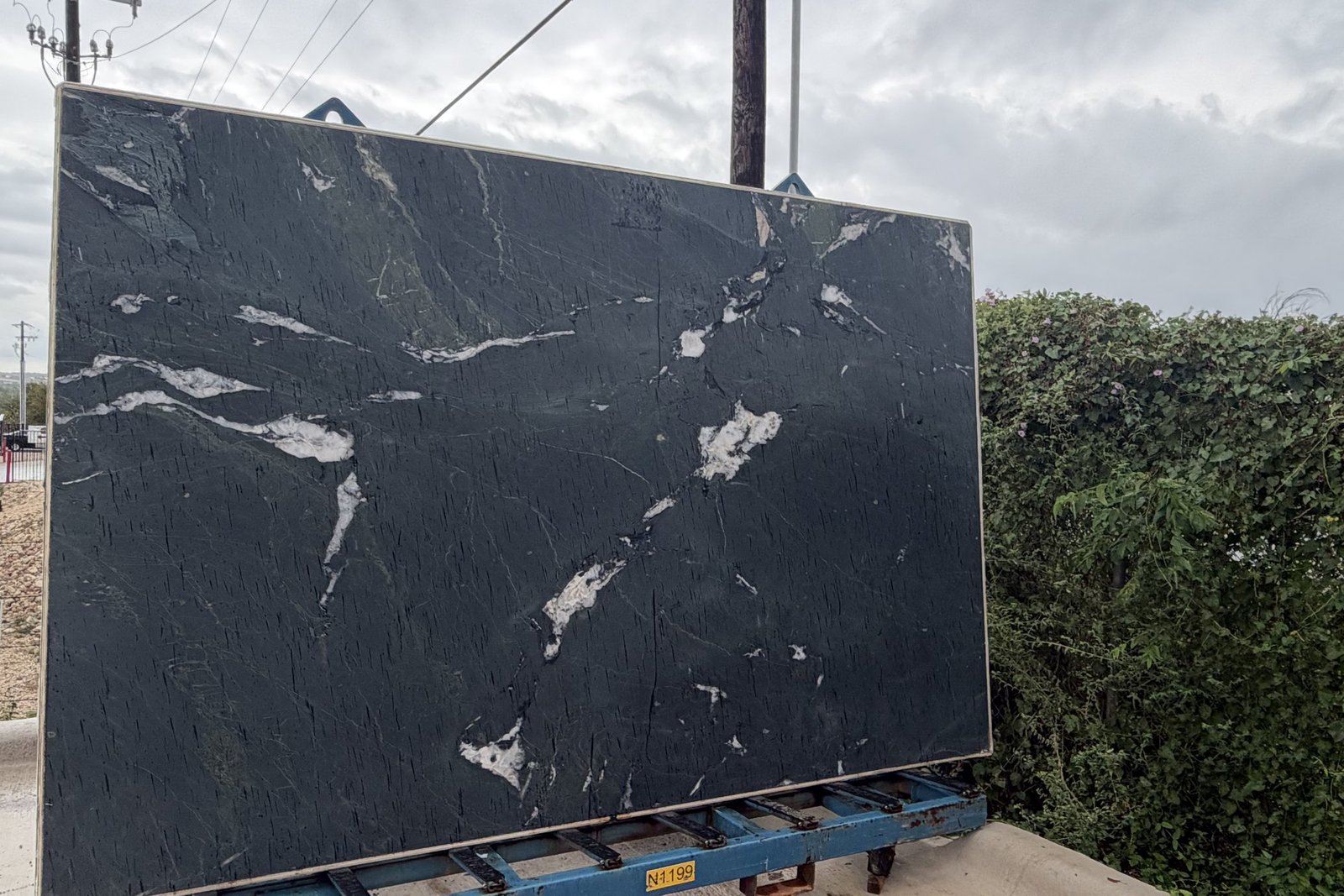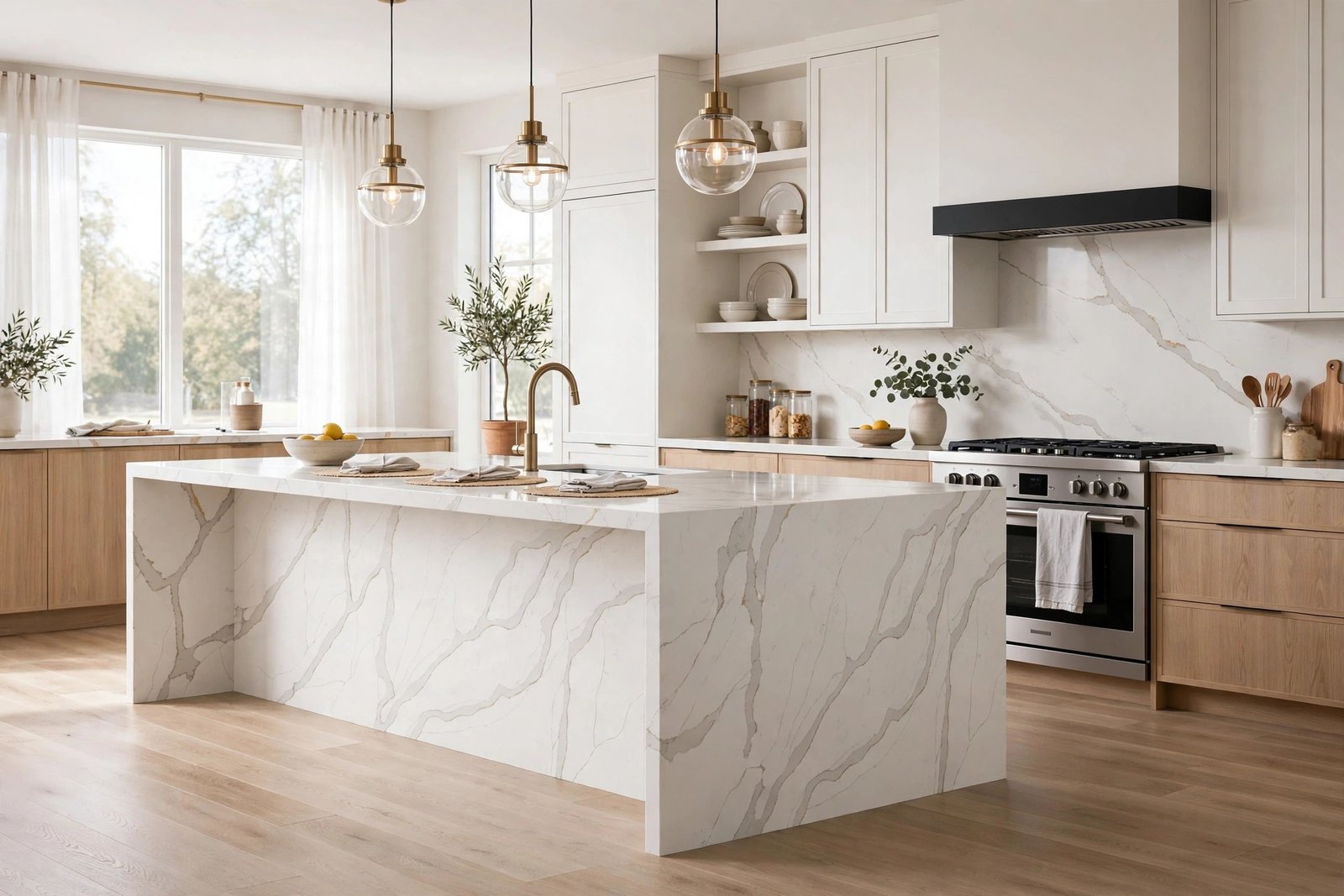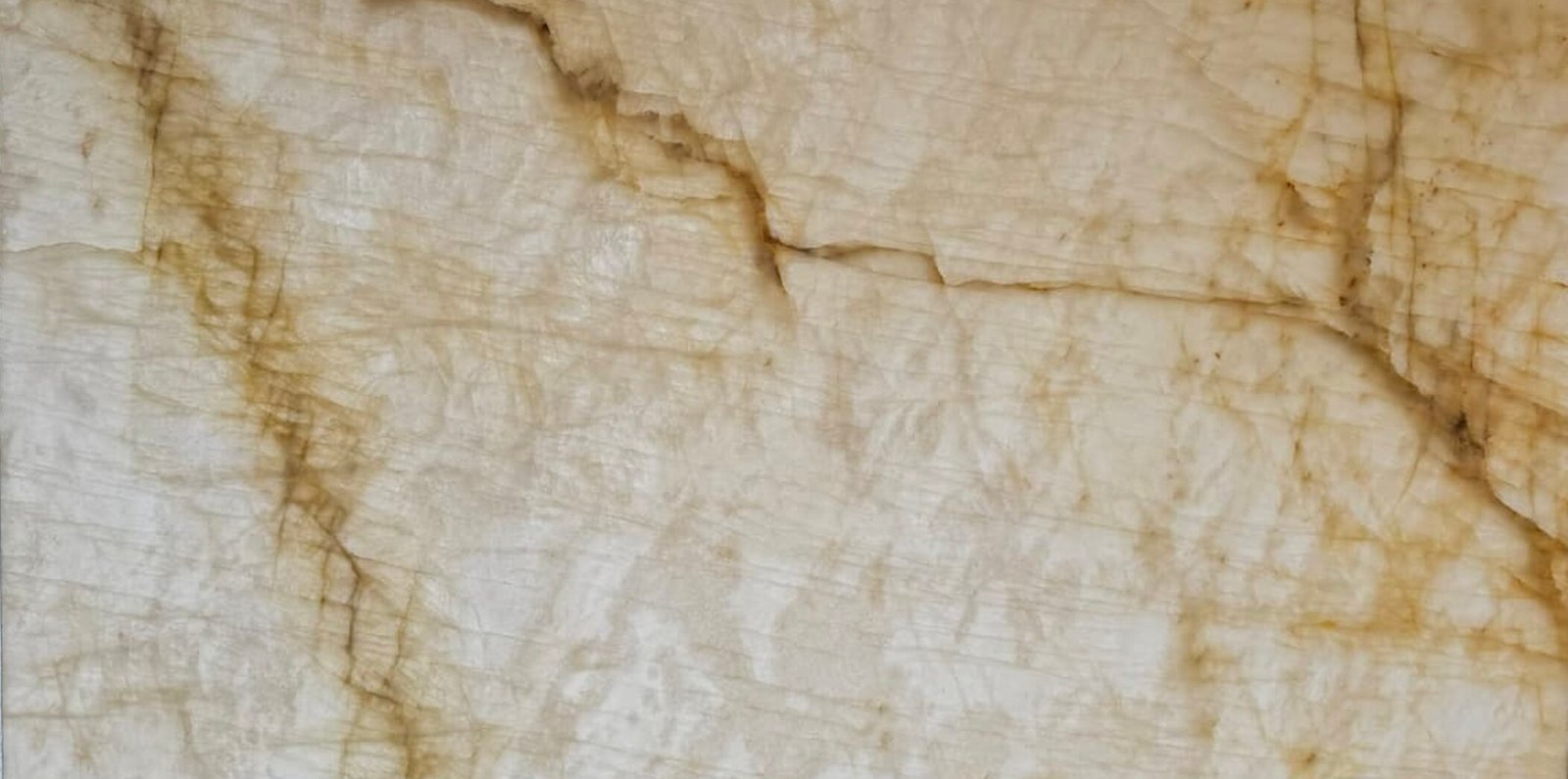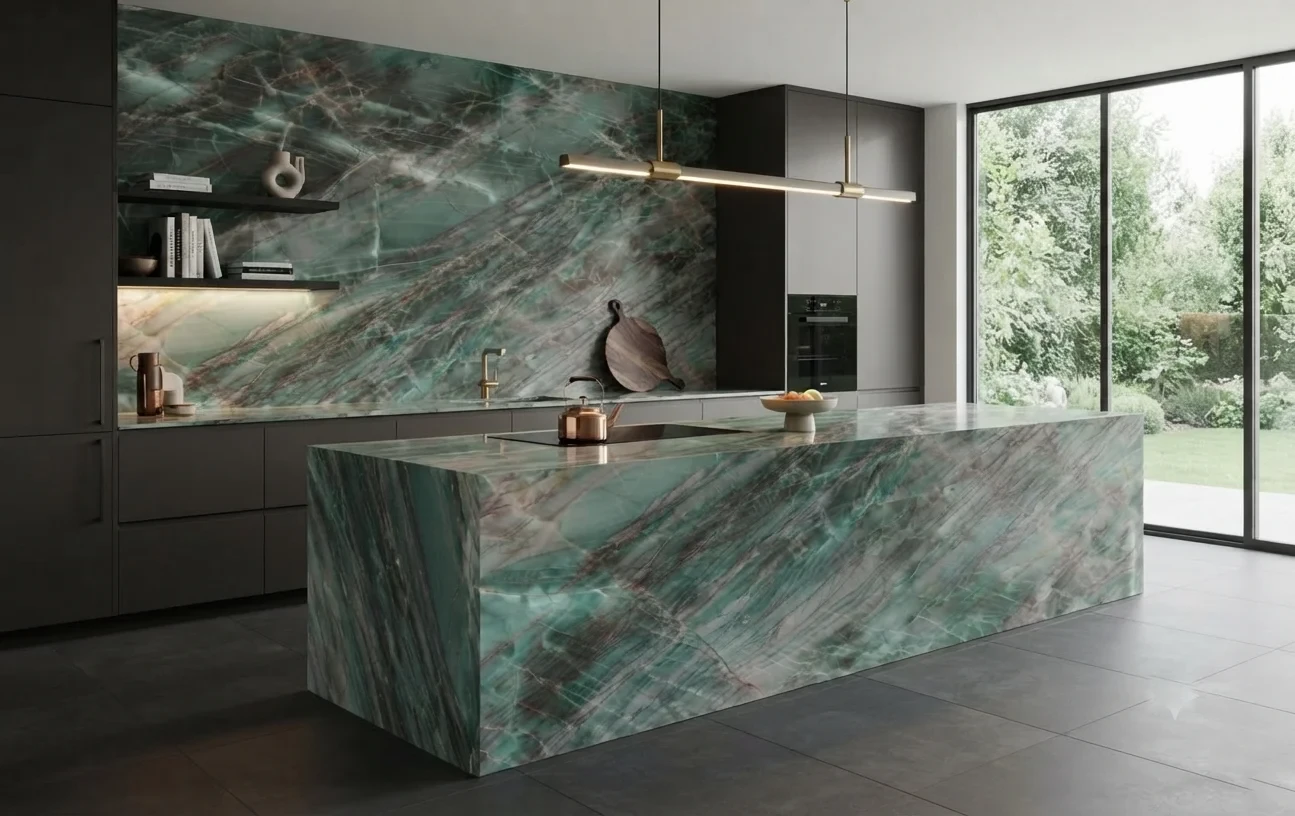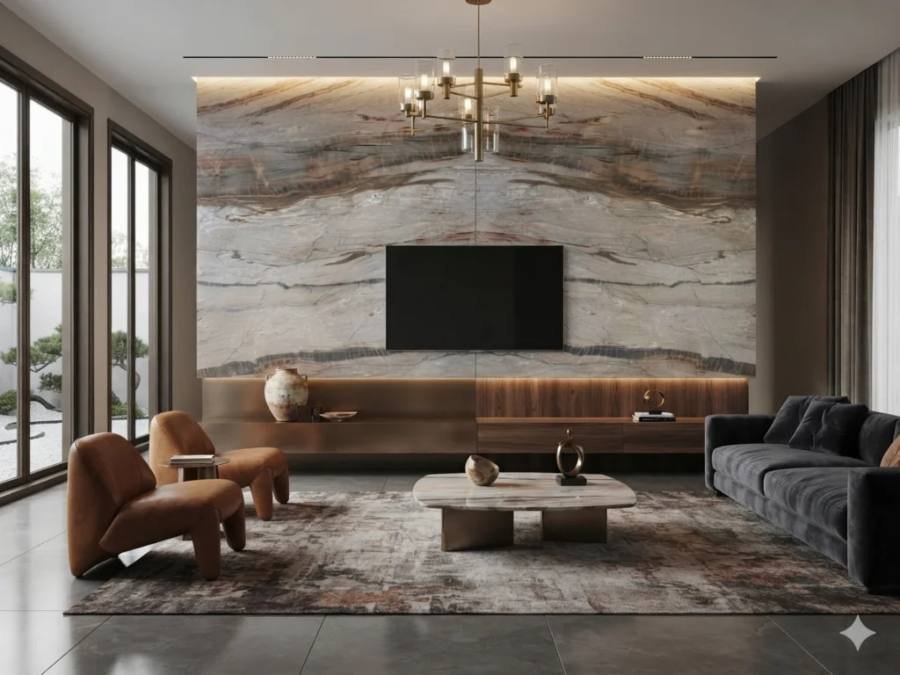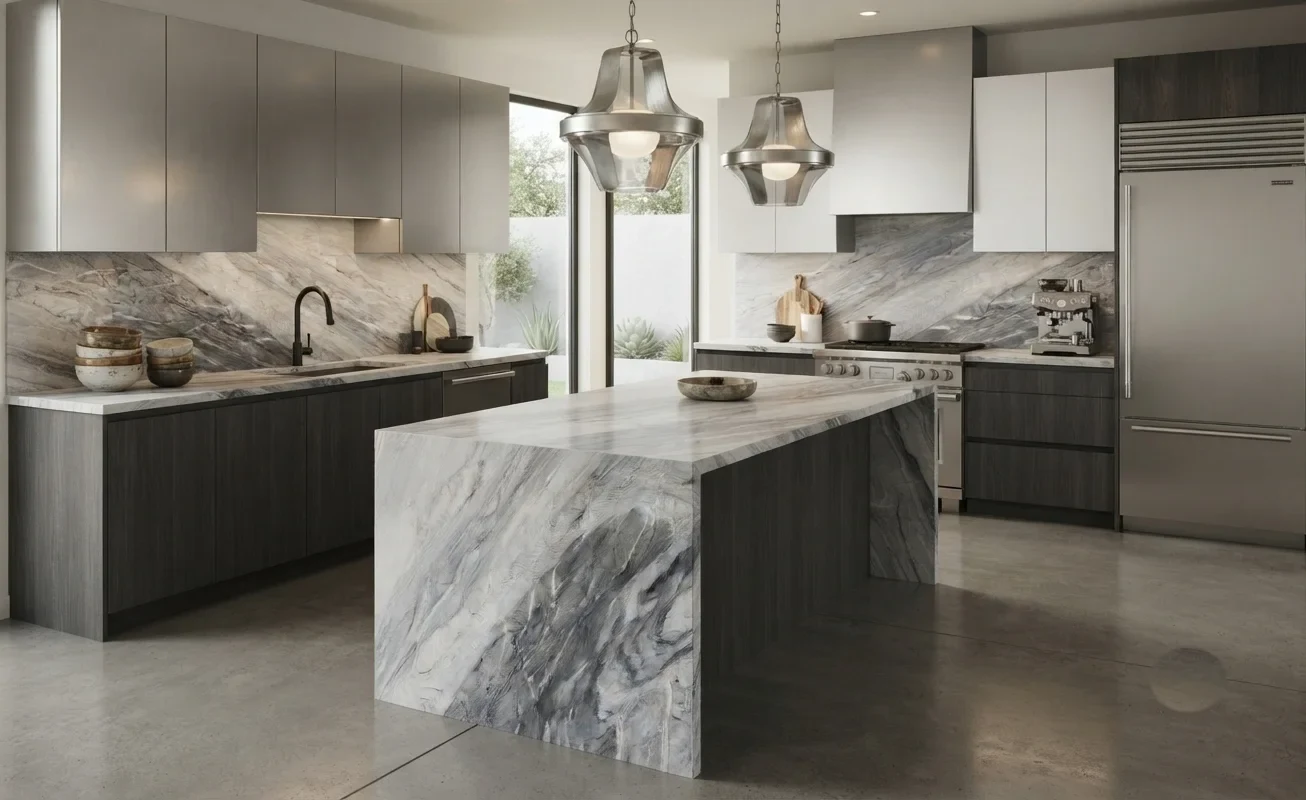
Few names cause more confusion in a stone yard than “Taj Mahal.” We stock two different stones that share it — a natural Taj Mahal quartzite and a man-made Taj Mahal quartz — and they are not interchangeable. Here’s how to tell them apart, and how to choose.
Taj Mahal quartzite: the natural stone
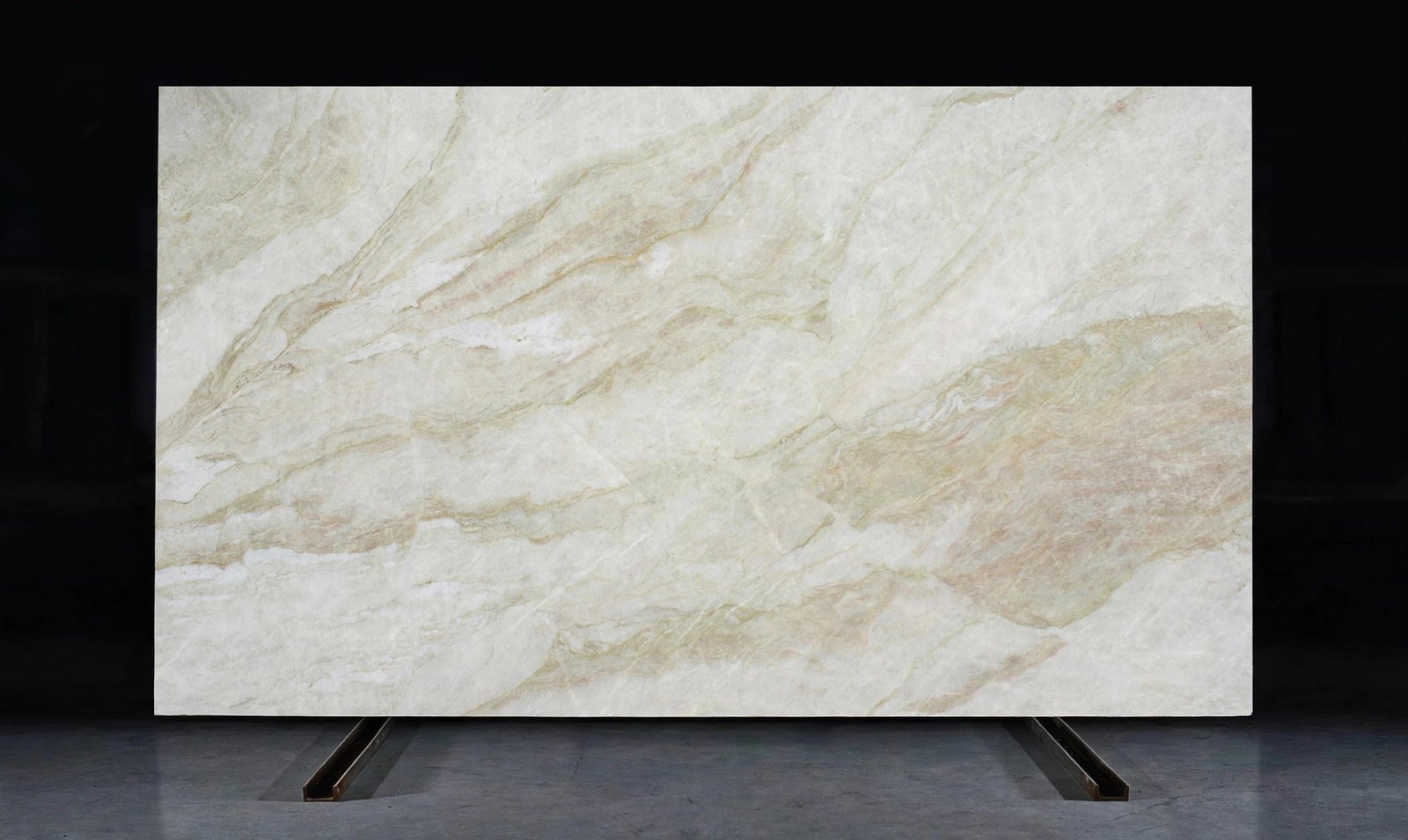
Our Taj Mahal quartzite is quarried in Brazil and arrives at our Buda yard as 3 cm slabs with a soft honed finish. Every slab is one of a kind: a warm ivory-cream base with flowing gold, taupe and soft grey veining that moves like watercolour. Because it’s a natural quartzite, it’s harder than granite, resists heat, and needs sealing — an impregnating sealer at installation, refreshed every year or two.
Choose the quartzite if you want the real, organic movement of natural stone, a surface that handles hot pans, and a kitchen that no one else can copy exactly.
Taj Mahal quartz: the man-made stone
Our Taj Mahal quartz is engineered: natural quartz crystals bound with resin into jumbo 3 cm slabs with a polished finish. The look is inspired by the same warm ivory-and-gold palette, but the pattern is calm and consistent from slab to slab — what you see in the sample is what you get across the whole kitchen. Quartz never needs sealing and shrugs off stains, but it doesn’t love heat, so trivets are a must.
Choose the quartz if you want low maintenance, a predictable pattern across a big island, and the same warm look at a friendlier price per slab.
Side by side
- Origin: quartzite — natural, quarried in Brazil; quartz — man-made.
- Finish in our yard: quartzite — honed, 3 cm; quartz — polished, 3 cm jumbo slabs.
- Pattern: quartzite — unique, flowing, varies slab to slab; quartz — consistent and repeatable.
- Care: quartzite — seal at install, reseal every 1–2 years; quartz — no sealing, ever.
- Heat: quartzite — heat-resistant; quartz — use trivets.
- Price: the natural quartzite is the premium stone; the quartz gives the look for less.
Which one belongs in your kitchen?
If your heart is set on a one-of-a-kind natural slab and you don’t mind a little sealing, the quartzite is the forever choice. If your kitchen works hard, you have kids at the counter, and you want the warm Taj look without the upkeep, the quartz earns its place. Many of our Austin-area clients stand in front of both racks before they decide — the stones settle the argument in person.
Both are in the yard now. See what’s in stock on our Live Inventory, or read more about slabs for Austin homes on our Austin stone slabs page. Open Thursday to Saturday at 5229 FM 2001, Buda — other days by appointment. Questions? Call or text (726) 241-4903.
Which would you pick for your kitchen — natural or man-made?